
Buy or Build an AI Content System: What Should You Consider?

I give up. I’m done trying to convince anyone that what LLMs do is not writing.
Even though that’s what I believe, it’s not what companies need now. They need content, and they need it fast and cheap.
Here’s what content writing will look like in the future (at least until quality comes into fashion again):
You open your AI writing tool. It has already created your ICPs, mapped your site’s performance, analysed your site content, researched competitors, helped you define the brand voice and messaging, and then created a complete SEO/GEO-focused content strategy.
You read today’s recommendation and approve or edit or regenerate. The tool writes a single piece of content or an entire cluster, and gives you a month’s plan in advance. The first draft appears in minutes. Fast, and easy.
The questions every company needs to answer now are:
🛠️ Should I build or buy an AI content system? Take on the challenge internally or subscribe to a dedicated tool?
And then
▶️ If I buy, how do I choose the right tool for my needs?
▶️ If I build, whose project is this, IT, marketing, content, or all ?
▶️▶️▶️ Who will operate the tool going forward?
These aren’t trivial questions. But I want to focus on the last one first. It relates to the end goal and what you want your content creation to look like.
To answer this, you must understand which part of the work best remains in the hands of humans.
Creating Human-AI Teamwork
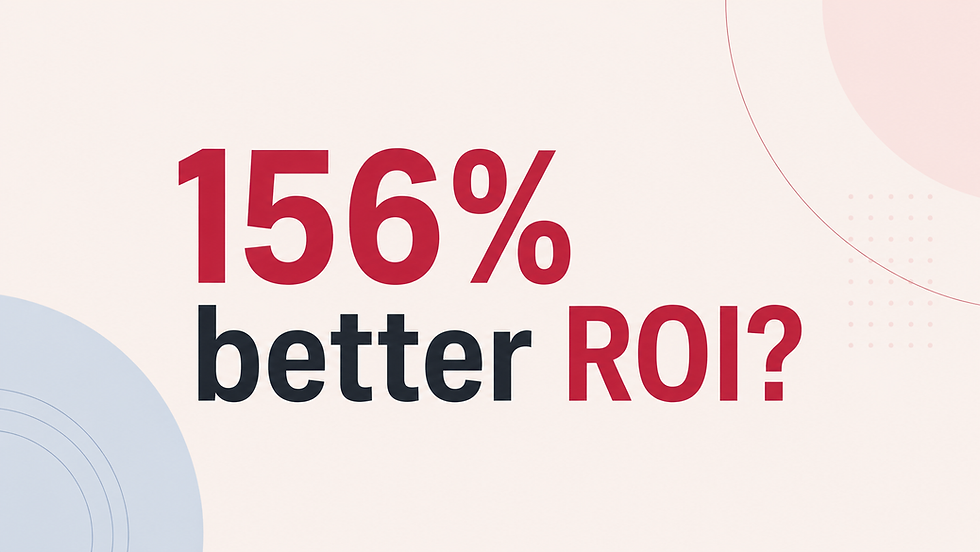
A report by a company presenting itself as the “AI Content Engine for startups” claims that 156% better ROI comes from blending 70% automation with 20% human oversight and 10% strategic refinement, not full automation.
These 20% are critical. Because despite the need for speed, brands still need to convince. And that takes human sensitivity and judgement.
As I learned from Adam Davis of Vectis, who’s been building content agents and teaching others how to do it, “You still need the experts”.
✍️To write product-focused content, you need to involve a product expert.
👀To ensure visibility, you need the eyes of an SEO professional.
👍To write persuasive marketing content, you need the expertise of a writer.
Product and SEO professionals have a lot of work in the initial set-up and then periodic reviews and updates. But the writer is needed for every single article. She is also still the only one who can make the content stand out.
The human workload may only be 20%, but that carries 80% of the weight. So, no matter whether you buy or build, the main question must be, “Where do you put that weight?”
The answer is already there, theoretically. Pairing AI and human expertise is the only setup that ensures efficiency and emotionally engaging copy.
A study at the MIT Center for Collective Intelligence including more than 100 experiments concludes that, “Combinations of humans and AI work best when each party can do the thing they do better than the other.” When that’s the case, the results exceed those of human-only or AI-only execution.
I think that describes effective teamwork. Aristotle already contemplated how “the whole is greater than the sum of its parts”. When each team member contributes what they do best and let the other do their best in their field.
An AI agent is basically just another team member. We need to task it with what it can do better than any other team member, not everything.
The research also found that the best results are achieved on tasks that humans are better than AI, mainly tasks that involve decision making. If I translate this into a content-creation work: AI can augment human output, as long as humans make the decisions.
What AI Does Better and What Humans Do Better
AI can research, structure, scale, and optimize your content for search. It’ll take on a set of responsibilities just like a human team member.
AI responsibilities would include:
🤖 Research the competitive content landscape and provide data that helps the team make decisions. That spans from the macro of positioning and messaging to the micro of each single article.
🤖 Find data and arguments to back up claims to be used in content creation.
🤖 Monitor competitor activity and alert the team on specific cases, so the team can decide whether it needs to act and do so quickly.
🤖 Analyse search data to fuel an SEO/GEO strategy. Based on that, plan content architecture, article structures etc. to be approved by the team.
🤖 Brainstorm Ideas; Any kind of creative idea, as part of the brainstorming sessions in creative teams.
Human team members need to be responsible:
😀 To provide real-world input to facilitate positioning and messaging decisions.
😀 Present the data and frame the arguments in a way that convinces humans.
😀 Evaluate urgency and prioritise tasks and activities.
😀 Test proposed content approaches.
😀 Write based on SEO/GEO best practices and proposed structures.
Yes, I would leave the writing to a human. LLMs can create excellent outlines for SEO/GEO-focused articles, but the writing is …. well, frankly, it lacks connection to reality.
That’s the difference between copy that ranks and copy that converts. If all you’re looking for is ranking, at least have a human team member edit. It may save you from embarrassments.
Time Is a Major Factor When Building
Let’s say, we agree that someone with professional marketing writing skills should operate the content tool. You are still left with the question of buy or build an AI content sytem.
I asked marketers who have built an AI tool to automate content creation how long it took. One said half a year, but it was not working the way he wanted, yet. Everyone else also talked about months, and they all agreed it took much longer than expected.
It seems like an ongoing project for all, without a deadline or final launch date. McKinsey states it takes 5+ months for highly customized or proprietary models.
This brings us to the next question: who’s in charge of building it? We are talking about a long-term project. The people with the necessary expertise need to have sufficient availability over months.
Data preparation and integration typically make up 40–60% of total project time. They are the largest timeline consumers. This would mean IT should be in charge. You still need product marketing and content writers involved; Otherwise the tool will spit out technical datasheet-like content. Believe me, I’ve seen it.
But that isn’t even the biggest challenge. 42% of companies say that change management as the top challenge (Deloitte).
This means, when you’re done with the project, you have no guarantee that this will actually be deployed and accepted in the organization.
And another question that keeps jumping at me like a pop-up saying “Before you go, check out….”
By the time the tool is ready to get to work, is it still relevant or already outdated?

Is Buying an Option?
Some companies may well have the bandwidth for such a long-term project. And after all, you can build in stages; Gradually move tasks to agents. Or start with a simple workflow and keep adding on.
Should you decide to look into the buy option, there’s already quite a competitive landscape of tools out there. The decision which one depends - as usual - on your specific needs. I’ve been testing some tools over the past month and am surprised at the variations in quality and different features these tools offer.
But that’s content for another post. Follow me on LinkedIn to learn about what these tools can and can’t do and who offers what. It may help you decide.
Just keep in mind, no matter what you decide, the 20% of human expertise is critical.


Comments